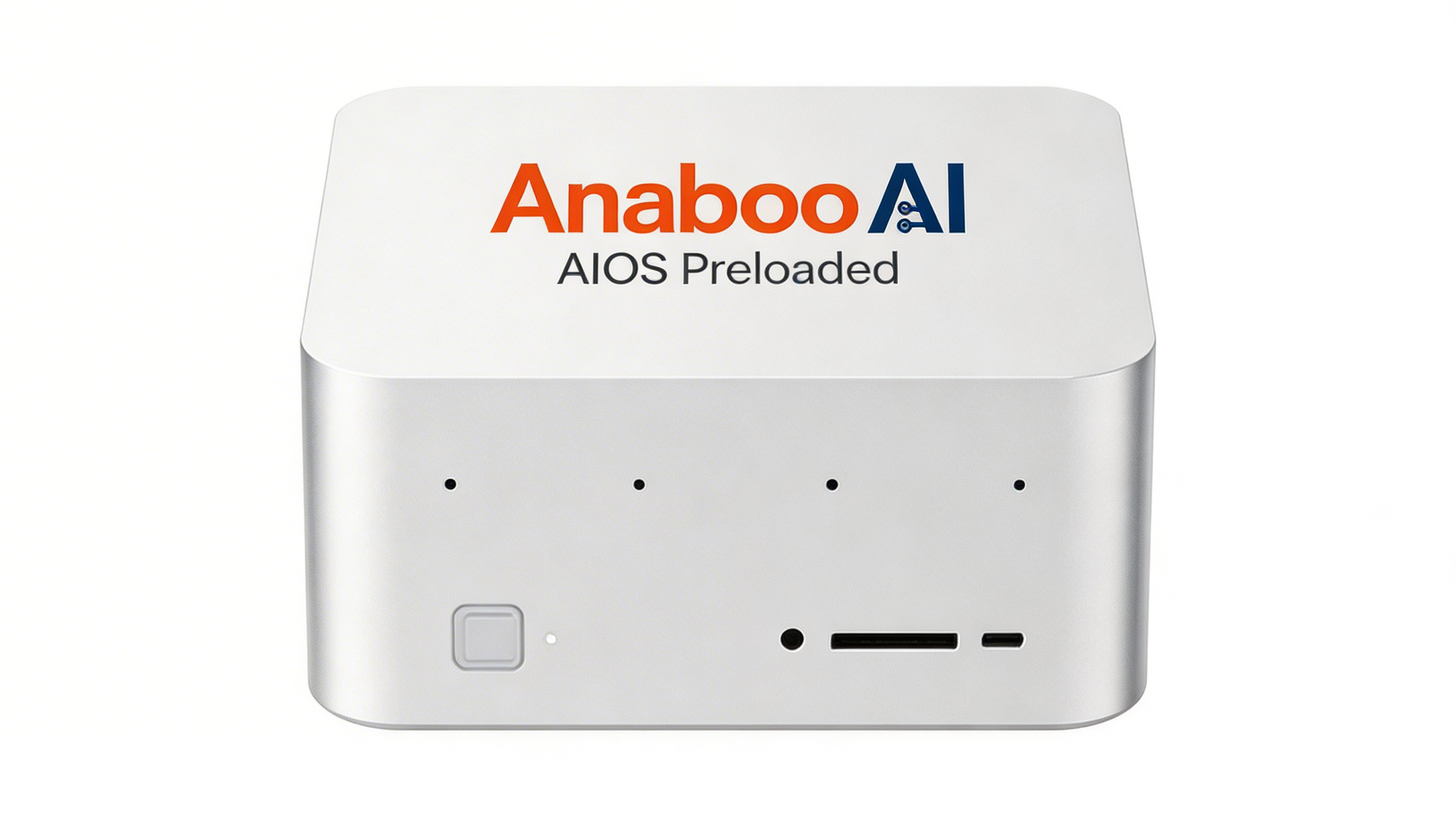
Turn AI into a trusted partner in your business with tools that augment your team. One month of build. Two months of follow-up. 25 pre-built skills + 3 custom skills, drawn from a library of over 79.
In one paragraph: AIOS Founder Edition installs an AI Operating System into your business loaded with 25 pre-built skills and adds 3 custom skills built around your specific day — drawn from a library of over 79 skills doing real work in real businesses. Built around you personally — the founder — not your operations team or HQ. One month of build, two months of follow-up support, and you're self-reliant.
That experience put one thing very clearly in front of me: founders who get fluent with AI personally — at their own desk, on their own phone, in their own week — pull away from the founders who try to bolt it on as a corporate project. The personal layer comes first. The business and team layer comes when the founder knows what to ask for.
This proposal is exactly that. Phase 1. Personal. Just for you. Not a team rollout. Not a department-wide install. Not yet — those are Phase 2 and Phase 3, costed and scoped separately when you're ready.
✓ You at Level 2 — three skills working in your business, plus your own Level 1 fluency sharpened. AI is part of your daily working rhythm.
✓ Three custom skills live in your day — your picks, built together over the month, documented so you (or someone you brief) can extend them.
✓ The know-how to build the next skill yourself — or to come back and have us build it. Self-reliant by design.
✓ Two months of follow-up support — fortnightly check-ins, drift maintenance, prompt re-tuning.
✓ A Phase 2 conversation in month two — the wider business rollout scoped and ready when you choose to take it.
Who we are. What we build. Why our way of working fits a founder who values cash flow, ROI, and not having to become a tech company to get the benefit of AI.
Anaboo AI exists to make AI work for established business owners who don't have the time, headspace, or appetite to figure it out themselves.
We're not a software vendor. We're not a research lab. We're a done-for-you AI implementation firm. Founded in 2023 after three decades running property, financial services, and operations businesses across Singapore, the UK, and Australia. Every solution we deploy has been stress-tested in my own businesses first — Ezytrac Property (2009, still running), Gladfish / YPC (2004, still running), Darra Tyres (1984, still running, started by my parents).
2023, Singapore. Ten-plus people across full-time and contract in Singapore, the UK, and Australia.
Singapore (primary), United Kingdom, Gold Coast Australia. Clients globally.
Usual packages run USD $10k–$100k depending on scope and depth.
Profitable owner-led businesses, typically 5+ years old. Founders who think in cash conversion, ROI, depreciation, and unit economics. Industry agnostic.
The window for AI as a competitive advantage is open right now — but not forever. Businesses that implement AI intelligently today compound gains for years. Those that wait spend the same years catching up.
By the end of week 1, you'll be using AI in your daily work the way you'd use a senior team member. By the end of month 1, you'll have three custom skills built for and working in your business — plus the know-how to build the next one and a costed Phase 2 ready when you decide to take it.
AIOS = AI Operating System. The framework Anaboo uses to deliver every implementation — pre-configured, modular, and built around three working levels. Not software you install. A way of organising AI so it actually works for an owner-led business. Starts small. Grows with you.
The trap, the bottleneck, and why founder-led AI fluency beats org-wide AI rollouts every time.
You didn't start the business to end up doing this version of the job.
The first three or four years, the founder is the process. You hold it in your head. Decisions are fast because they happen in one skull. That speed is the company's superpower.
Then somewhere between year five and year seven, the team grows past ten or twenty people. You're still the bottleneck — but now there are more decisions queueing up behind you. The calendar fills with approvals, not strategy. Traits that built the business — bias for action, hands-on, hold it in your head — quietly flip from asset to liability. You walk into the third meeting of the morning, approving something that should never have needed your approval, and you think: this is exactly what I left.
The pattern is consistent across surveys. Founders of established businesses are not failing — they're succeeding into a corner.
Every operational fire ends up at the founder's desk. No filter. No deputy. The team waits. The calendar fills with approvals. Decisions stack up because every decision flows back through one person — you. That's the bottleneck.
The harder part: the bottleneck doesn't ease as the business grows. It tightens. More revenue means more decisions. More staff means more questions. More success means a smaller percentage of your week available for strategic thought.
The thing that built the business is now eating the founder. The fix isn't another hire — that just creates new questions to route through you. The fix is a layer of intelligent decision-making that doesn't sleep, doesn't quit, and doesn't need you in the room. That's what AIOS Founder Edition installs.
Every operational fire ends up at the founder's desk. No filter, no deputy, no layer in between.
Adding revenue means adding hours. The model only grows by consuming more of the owner.
Quality talent isn't easier to find. Good hires need months of founder time before they're useful — short-term, the bottleneck gets worse.
Operational noise drowns out vision. Strategic thought turns into "the thing I'll do this weekend."
Profitable on paper, but 80–90% of personal wealth is locked in the business and you're not sure what it's actually worth.
67% of owners check in daily on holiday. The business demands constant supervision because nothing else has been built to supervise it.
Half of owners have done zero transition planning. They know they should. They cannot find the bandwidth.
Team can't help (they're staff). Spouse is tired of hearing it. Peers are competitors. Nobody to actually think with.
Most "productivity tools" don't help. They add another inbox, another dashboard, another notification. The bottleneck remains the founder. AI is different — and not because of the technology, because of the shape of what it can do.
An AI agent absorbs decisions, drafts replies, distils reports, and surfaces anomalies — without joining your team meetings, without needing onboarding, without leaving for a better offer. Done well, it's the first version of an exit plan that doesn't require selling. The same system that frees the founder also makes the business sellable.
"Get the founder fluent. The team plays come next. Right tool. Right time. Right order."
If you take one thing from this proposal it is this. Most failed AI projects fail because the operator reaches for the AI before they've cleaned up the process. The pyramid is upside down on most decks. Here's the one that works.
Map each workflow. Find the waste, the bottlenecks, the duplication. AI cannot fix a broken process — it only makes broken things break faster. This is the work we've been doing in operations for 20 years. AI made the payoff bigger.
Once processes are clean, automate the repetitive. Triggers, workflows, follow-ups, data movement — remove humans from tasks that don't need them.
Apply AI to the clean, automated foundation. Clear bottlenecks. Generate reports. Make you and your team dramatically more productive. The 5% is where the magic feels obvious — but it only works because of the 95% underneath it.
Where most founders are today. Where Phase 1 takes you. What Levels 2 and 3 look like when you're ready.
Using ChatGPT, Claude, Gemini and the like as your daily-use search engine, draft writer, research distiller, and thinking partner. No agents. No automations. No infrastructure. Just you, an open chat window, asking questions and getting answers.
What it gets you: drafting content in 10 minutes instead of an hour; pulling industry research in 15 minutes instead of half a day; pressure-testing decisions with a thinking partner that's read everything; cleaning up emails and briefs faster than anyone on your team.
Single-purpose AI agents trained on a specific slice of your business — your SOPs, your brand voice, your supplier list, your past content. Each agent knows one zone and does one job. They don't talk to each other. This is what Phase 1 delivers: three solo agents, each with one job, ready to work in your business.
What it gets you: repeatable AI workflows that are faster and more accurate than Level 1. A lead qualifier that knows your ICP. A proposal drafter that writes in your voice. A weekly distiller that flags what needs your attention.
How long you stay here: at least your first months after Phase 1, almost certainly longer. Most operators stay at Level 2 for years and get massive leverage from it. Many never need Level 3.
A team of AI agents that talk to each other, coordinate on tasks, and refresh their knowledge live. The full AIOS architecture — six workspaces, a CEO orchestrator, the privacy / guardrails / quality gates, agents that can spawn new specialist agents on demand.
Who lives here: when people talk about "one-person businesses" running serious revenue, they are at Level 3. End-to-end customer journeys, business-wide compliance monitoring, AI receptionists, customer portals — that's all Level 3.
What it requires: Phase 1 done, time at Level 2, and a deliberate strategic call. Many of our clients never go to Level 3, and that's fine. Level 2 transforms a personal working day. Level 3 transforms an organisation.
My honest advice: Phase 1 takes you from L1 to L2 in one month, then two months of follow-up to settle in. The leap from L1 to L2 is huge in productivity terms; the leap from L2 to L3 is huge in complexity terms. Most owners who skip L2 end up with Level 3 shelfware. We move one level at a time so each level pays for the next.
Data. Context. Intent. The three layers every working AI implementation gets right — and the three layers most rushed AI projects ignore.
Anaboo's framework for an AI implementation that actually works rests on three layers that have to land in order. Skip a layer and the AI looks impressive in the demo and falls over in the field. Get all three right and even a Level 2 implementation produces output you can rely on.
The clear ask — what this run is trying to do
What good looks like — your voice, brand, audience, guard-rails
The truth source — your SOPs, contracts, history, comms
Foundation — everything stands on this
Build bottom-up. Skip a layer and the AI sounds impressive in demos but breaks in the field.
An AI agent is only as useful as the data it can reach. Data is the structured truth source — your SOPs, your supplier list, your customer agreements, your past content, your internal email history, your numbers. It's organised, it's clean, it's accessible to the agent, and it's yours — not floating in a vendor's training cloud.
Even with the right data, an AI without context will write a sales email like a press release and a press release like a sales email. Context is the framing layer — your brand voice, your house style, the audience, what success looks like, what to avoid. It's where "good" is defined for the agent so it can produce work that sounds like you, not generic.
Data and context aren't enough on their own — every interaction also needs a clear intent. What is this run trying to do? Draft a post. Summarise a weekly. Surface anomalies. Without explicit intent, the AI will guess — and guess at the average expected outcome, not your actual one. Skills that bake intent into their structure produce sharper output every single time.
Most of the work in a working AI implementation is in the three layers, not in the model itself. The model is a commodity. The layers are the craft. We've spent three years productising that craft inside AIOS so the build month delivers production-ready skills, not demo-ware.
This is why we build and customise AIOS to suit your unique business context — and why the same set of skills doesn't work copied-and-pasted from one business to the next.
Phase 1 deploys AIOS into your environment with the standard skill library pre-installed. These are the modules you have access to from day one, regardless of which three you choose to actively customise. Think of them as the toolset on the workbench — you can pick up any of them as the need arises.
| Standard AIOS skill | What it does |
|---|---|
| Context OS | The business context engine — captures your knowledge, voice, and operating reality so every skill can reach for it. |
| Data OS | Connects external data sources (Stripe, Xero, GA, Sheets) into a local, queryable layer with daily snapshots. |
| Intel OS | Indexes Fireflies/Fathom meeting transcripts and Slack messages so any skill can search by person, topic, or date. |
| Daily Brief | Morning intelligence report synthesising data sources and meetings into recommendations and next actions. |
| Productivity OS | GTD inbox → decision tree → dashboard → weekly review. Tasks moving without ceremony. |
| Command OS | Telegram bot interface — run AIOS from your phone with voice notes, photo analysis, always-on chat. |
| Infra OS | Git versioning, GitHub backup, automatic change history. Nothing you build is ever lost. |
| Content Pipeline | Capture → develop → schedule pipeline for content ideas and posts. |
| Deep Research | Parallel multi-platform research across web, YouTube, Reddit, X, academic, podcasts, Substack. |
| Board of Directors | Convene 13 AI directors to debate a proposal — chaired by a Kerry Packer-style straight-talker. |
| Diagram Engine | Natural-language → architecture / process diagrams via D2. |
| New-App, Frontend Design, Stitch, Thumbnail Generator, Writing Style | The design and content production stack — mockups, design systems, brand-aware thumbnails, AI-tell removal. |
| Firecrawl, Supadata, Reddit, X-Search, Substack, Podcast-Search, Academic | The data ingestion stack — web scraping, video transcripts, social/forum search, scholarly papers. |
| Module — New Capability | Guided 7-stage workflow for building any new API integration into a Claude skill. |
| Openclaw AI Employee | Deploy autonomous Claude agents on a DigitalOcean VPS — for 24/7 skills. |
Skills above are part of the AIOS standard install — no separate fees, no per-seat charges. The three you actively build out in Phase 1 are configured against your specific data and context. The rest are available as you discover the need.
Beyond the standard AIOS library, you can also access community-built skills published on the internet. That said, we strongly suggest you do NOT install anything from the internet for at least the first month, due to the very real dangers of malware, prompt-injection vulnerabilities, and skills that quietly exfiltrate data. We will discuss this in detail during the implementation meeting and walk through the safe-install patterns when the time comes.
The exact deliverables. The exact timeline. The things that aren't included and why we held them back.
The AIOS implementation is designed to make you self-reliant. After month three you have three options: (a) keep developing with us on a per-skill or retainer basis; (b) extend the skills yourself using the documented build patterns; (c) brief a developer of your choosing using the documentation we leave with you.
No locked-in licence. No platform you have to keep paying us to access. Your skills, your data, your context — yours.
| Metric | Today | By end of month 3 |
|---|---|---|
| Inbox first-touch response time | ~45 min | <10 min |
| Content / posts published per week | ~1 per week | 2–3 per week, in your voice |
| Time per content draft | ~60 min | 10–15 min including edit |
| Time per proposal / quote draft | ~3 hours | <30 min to first sign-off |
| Market / competitor intelligence depth | What you remember | Continuous, weekly digest in inbox |
| SOP / contract lookup | Find later, sometimes | 10 seconds, on the call, with citation |
| Founder hours reclaimed per week | — | 8–10 hours |
| Not included | Why we held it back |
|---|---|
| Dashboards | Level 3 capability — they aggregate the output of a multi-agent system. Building one before the agents exist is putting up a billboard for a road that hasn't been laid. |
| Multi-agent orchestration | Level 3 — different architecture, different infrastructure, different cost band. |
| Customer-facing AI | Anything customers touch is Level 3 territory and should never be built before the founder is fluent enough to spot bad output. |
| Team rollout | Phase 1 is yours. We extend to the team in Phase 2 once you've defined what good looks like at Level 2. |
| Bespoke software builds | Anything that requires custom front-end software belongs in Phase 2/3 with a separate scope. |
This proposal does not include any on-site time. The implementation is run from Singapore — Zoom or equivalent for every working session. If at some point you'd like Brett on the ground for a workshop or team session, that's a separate scope and a separate cost.
Three custom skills you choose. Each one solves a specific problem, produces a specific report, or communicates a specific message — repeatedly, in your voice. Nine examples below across Sales, Marketing, Operations, Finance, Admin, and Management — they're starting points, not a constraint.
The focus is on three skills, chosen by you, that each solve something specific in your business. A skill should do one of three things, repeatedly and reliably:
The nine examples below — drawn from the Anaboo skills library (79+ skills total) — span the six business areas where founders typically feel the most leverage. Your three skills don't have to come from this list. If you've got a workflow in mind, bring it to the scoping call and we'll build that instead.
For each of your three skills we build it on screen-share with you watching. You see how the data layer is structured, the context is captured, and the intent prompts are written. You get every prompt — copy/paste/save — so you can replicate the pattern for the next skill yourself, or brief someone else to. No black box. No magic. Just craft, written down.
Trained on your ideal customer profile, your past won/lost deals, and your sales playbook. When a new lead arrives — via web form, email, or referral — the agent enriches the company, scores against your ICP, flags red and green signals, and drafts a one-page pre-call brief with three suggested discovery questions in your voice. You walk into every sales call already up to speed.
Trained on your past winning proposals, your pricing logic, your standard scope/inclusions, and your contract boilerplate. You hand the agent your discovery notes (or a Fireflies transcript) and it drafts a complete proposal — exec summary, scope, deliverables, timeline, pricing, T&Cs — in your voice and your house format. You spend the time editing and signing off, not staring at a blank page.
Trained on your historical LinkedIn voice, your brand register, and your view of the industry. Drafts LinkedIn posts, articles, newsletter sections, and short video scripts on themes you care about — customer wins, lessons learned, industry takes, founder reflections. Every draft watermarked "DRAFT" — never auto-posts. The founder-brand compounds while you're doing other work.
Continuous scanner of your top 10–20 competitors, the regulators that matter to you, and the customer-signal sources your industry watches (review sites, key forums, trade press). Pulls what's changed each week — pricing moves, new entrants, regulatory shifts, customer-sentiment swings — and drops a one-page digest in your inbox every Monday. You walk into the week already in front of the team.
A private knowledge brain trained on the documents that hold the institutional memory of your business: SOPs, supplier contracts, customer agreements, training materials, decision logs, key email threads, the operating playbook. Lives on your phone and in a private chat interface. "What's the procedure for a supplier dispute?" · "Which vendor handles overflow on the south coast?" · "What did we agree with X in 2022?" Returns the answer with citations.
Trained on your historical supplier comms (tone, structure, escalation patterns), your contract terms, and your vendor list. Reads incoming supplier email, drafts the reply in your voice, classifies it (routine / needs-decision / escalate), and queues it for your one-click sign-off. The drafts that need a real decision get flagged with a 30-second summary.
An agent that ingests your live numbers from Xero / QuickBooks / Stripe / your bank, plus your weekly P&L and cashflow forecast, and produces a one-page Monday-morning distillation: cash position, anomalies vs forecast, slow-paying customers, supplier exposure, three follow-up questions for your bookkeeper or finance lead drafted in your voice. The financial anxiety eases because the picture is always one click away.
An agent that ingests the routine reporting from your team — operational updates, sales pipeline, finance summary, project status — and produces a one-page distillation: what changed, what's anomalous, what needs your attention, three crisp follow-up questions drafted in your voice ready for the catch-up. Saves the half-hour of scanning and the half-day of email ping-pong.
Anaboo's Board skill convenes a panel of 13 AI directors (Strategy, Finance, Operations, Marketing, Risk, Legal, HR, Customer, Tech, etc.) to debate a proposal you put in front of them — chaired by a Kerry Packer-style straight-talker. You get back a structured transcript, a points-for / points-against summary, and a recommended decision. Designed for the calls that have been sitting on your desk too long.
To show how the examples fit together, four combos that land for different founder shapes. Illustrative, not prescriptive.
| Possible shape | Three skills | What it's solving |
|---|---|---|
| "Founder still in sales" | Lead Qualifier · Proposal Drafter · LinkedIn Drafter | For the founder still personally selling and trying to grow the founder-brand. Pipeline + closing + visibility. |
| "Step back, stay sharp" | SOP Brain · Weekly Team Distiller · AI Board | For the founder who's handed off to a leadership team and wants oversight without overhead. |
| "Founder brand, market ready" | SOP Brain · LinkedIn Drafter · Market Watch | One from Ops, one from Marketing, one from Marketing/Intel. Memory + visibility + intelligence. |
| "CFO-mind founder" | Cashflow Distiller · Weekly Distiller · Supplier Handler | For the founder who runs the business by the numbers. |
Your week today. Your week with Level 1 sharpened and three Level 2 skills running. The hours reclaimed.
The "after" assumes Phase 1 is complete and you've picked the "Founder brand, market ready" combo — skill 5 (SOP Brain) + skill 3 (LinkedIn Drafter) + skill 4 (Market Watch). The shape works with any combo of three.
Reclaimed: ~8–10 hours/week. Bigger win: every customer conversation gets faster, sharper. The founder-brand compounds in market while you sleep.
Eight to ten hours saved a week is 50+ days saved a year. That's a quarter of a working year. For a founder who's stepped back from day-to-day, it's the difference between strategic capacity and being constantly on email. For one still in the thick of it, it's the air to breathe that you've been promising yourself for years.
And — three skills delivers more than three times the leverage of one. Skills compound: Skill 5 (memory) feeds Skill 4 (market watch) historical context; Skill 3 (LinkedIn) is sharper because it can pull from Skill 4's weekly digest. Phase 1 isn't three independent wins. It's a connected toolkit that gets stronger the longer you run it.
The full Anaboo agent roster, the data sources, and what Level 3 unlocks when you're ready to take it.
Phase 1 lands you firmly at Level 2 — three solo agents working in your business with the underlying data, context and intent layers built. Level 2 is, for many operators, the destination. The leverage is high, the cost is contained, and the founder remains in command of every output.
Two natural paths open up from there. The first is extending Level 2 — building more custom skills around new problems as they surface, drawing from the wider 79+ skill library or wholly custom builds. The second is stepping up to Level 3 — the full multi-agent architecture that runs an organisation, not a desk.
By month two you'll have a clearer view of which next problems are worth solving with another custom skill. Phase 2 builds range from small bolt-ons or prompt refinements, through standard solo agents, all the way up to full software builds inside the business. Or — and this is the genuine path — take the build documentation from Phase 1 and have a go yourself. We're a phone call away if you get stuck.
Two AIOS modules are particularly worth flagging as standard tools you'll likely lean on heavily: Productivity OS (the GTD inbox → decision tree → dashboard → weekly review pipeline) plus the Daily Brief (morning intelligence report). Both come pre-installed with AIOS — no extra cost — and the build month includes wiring them into your specific data flow.
Level 3 is multi-agents with dynamic context — the architecture that powers an end-to-end customer journey, a business-wide compliance monitor, a full team rollout. This is where the language about "one-person businesses doing real revenue" comes from.
The full Anaboo agent bench at Level 3 includes: CEO Agent (orchestrator), Privacy Gate, Guardrails Gate, Quality Gate, plus specialist Directors for Customer Service, Marketing, Sales, Operations, Finance, Recruitment, Research, Compliance, Admin — and agents that build agents on demand. None of this connects in Phase 1 — mentioned here so you know what becomes possible.
Phase 1 (this proposal): three Level 2 skills + Level 1 fluency, one month build, two months follow-up, USD $10,000.
Phase 2: extend Level 2 (more skills, team rollout) — scoped per skill or as a bundle, costed after Phase 1 demonstrably works.
Phase 3: Level 3 (multi-agent, dynamic context, customer-facing AI, business-wide compliance) — costed once Phase 2 has earned its keep.
Each phase scoped on demonstrated lift, not on a slide. You never overcommit. We never overpromise.
One month of development. Two months of follow-up support. The deliverables, the de-risking, and the questions a CFO usually asks.
AIOS installed in your environment with 25 pre-built skills loaded and ready, plus 3 custom skills built around your day — drawn from a library of over 79 skills doing real work in real businesses.
Total engagement: three months end to end. No additional licence fees, no per-seat charges, no surprise add-ons. Pricing scoped on the call, against your specific shape — usual packages run USD $10k–$100k.
| Component | What it covers |
|---|---|
| Scoping and skill agreement | Pressure-test the proposal, agree the three specific problems / reports / messages your skills will solve, agree data and context sources |
| 25 pre-built skills — the AIOS backbone | The full standard AIOS skill library installed. As we build new skills for other clients, your library grows — you get access to each new addition as it lands. |
| 3 custom AI skills — built with you | Three custom skills you choose, drawn from the Section 6 examples, the wider 79+ Anaboo library, or wholly custom workflows. Built collaboratively so you understand the layers and can extend later. |
| Level 1 sharpening | Pattern training applicable to whichever AI tools you reach for; prompt structures for daily work |
| Personal prompt & pattern playbook | Yours forever, the 12–15 patterns you'll use 80% of the time |
| Skill build documentation | Hand to anyone who extends the skill (us, your team, an outside dev) and they can pick it up |
| Two months follow-up support | Fortnightly check-in calls + direct phone/email line + AI Drift Maintenance |
| Phase 2 scoping conversation | By month 2, scoped plan for whatever you want next, no obligation |
| Singapore / UK / Australia coverage | Calls scheduled to suit your week, support across your daylight hours |
A consultant leaves you with a deck and an invoice. We leave you with 25 pre-built AIOS skills installed in your environment, three custom skills built around your day, and the documentation to extend it yourself. The difference is what you can show for it on month four.
Before you commit a cent: the 60-minute scoping call is free. If after the call you decide Phase 1 isn't the right move — wrong timing, wrong scope, wrong fit — no obligation, no fee.
After the implementation kickoff: if any one of your three custom skills doesn't earn its keep within the build month, we extend the build at no extra cost until it does.
| Question | Answer |
|---|---|
| Where does the data live? | Singapore-region private vault by default. Other jurisdictions on request. None of your data is used to train public AI models — that's contractual. |
| What if Anaboo goes under? | You have the full build documentation. The skills run on the public AI APIs (Claude, GPT, Gemini) — they don't depend on Anaboo infrastructure. |
| Can I pause the build month? | Yes. One schedule reset per engagement, 7 days notice. We pick up where we left off, no penalty. |
| Is my data used to train AI models? | No. Contractual exclusion. Your data sits in a private vault, accessed only by your skills, never used to train any public model. |
| Who owns the IP? | You do. The data, context, and skill configurations are yours. Anaboo's IP is the AIOS framework itself, licensed for your use indefinitely with no ongoing licence fee. |
The window where AI is a category advantage is open right now and closing fast — within 12–18 months it'll be table stakes for established businesses, not a wedge. Phase 1 is the cheapest, fastest way to get your hands on the controls before you're catching up to competitors who started earlier.
Anaboo books two Phase 1 slots per month. Slots open the first business day of each month and typically close inside the fortnight.
The shortest possible path to Phase 1 kickoff. Two things from you. Three things from us.
The AIOS Founder Edition kickoff playbook
Book a 60-minute scoping call. Zoom or — if it lines up — face-to-face. We discuss the scope, spitball your three skill picks, and walk through the wider phasing. You leave the call with a confirmed scope and a clear answer either way. No pressure to commit on the call; the goal is clarity, not closing.
| Step | What happens |
|---|---|
| 1. 60-minute scoping call | You and Brett. Zoom or face-to-face. Pressure-test the levels framing, agree your three skills, agree data and context sources. |
| 2. Statement of Work | Within 3 business days. Confirms your three skills, the build plan, the milestone gates. |
| 3. 3–4 hour implementation kickoff | Single working block. We deploy AIOS, set up access, walk through the standard skill library, start the first build. |
| 4. Build month | Three custom skills built with you on screen-share. By end of week 4 — three skills live and documented. |
| 5. Months 2 & 3 — Support | Fortnightly check-ins. Direct line. AI Drift Maintenance. Phase 2 scoping at month 2. |
| 6. Beyond month 3 | Continue with us per skill or on a retainer, run with it yourself, or hand the documentation to a developer. Self-reliant by design. |
60 minutes. No commitment. Walk away with a clear answer either way.
AIOS Founder Edition is one of several Anaboo offerings. Visit the main site for the full picture, or jump straight to a sister edition.